
Note: I started writing up Topic 4 but most of my energy went into working on the written Critical Report (which was time well needed), so here I’ll just summarise up to the end of the project. I’m writing this in early January, so some time has passed since the last write up (late October).
Summary
What has this module helped me do?
- Be more confident talking about my photography
- Be more confident approaching, planning and collaborating with others. Not everything worked as well but the process helped how to define the project better for me.
- Exploring different research avenues other than the typical ones that seem to crop up. For instance, I ended up starting to read parts of Stanislavsky’s An Actor Prepares from a suggestion in another blog that was looking at understanding posing approaches.
- Understanding the differences between participatory and collaborative photography as it relates to my work (in short, they’re a Venn diagram that crosses over with plenty of overlap on the two depending on how you define each of them).
121 time
In the 121’s with Michelle she encouraged me to look at quite a few different photographers that used constructed narrative or took people out of their context (see previous posts). I don’t think I used the opportunities in this module to really push this angle but I made a start in a direction that I want to keep utilising – looking at performance and theatrical aspects (this came up in our post-module feedback session, I’ve got a chunky list to follow up and research in the coming months).
I also had webinar sessions with Paul and Ant and it was interesting to see their opinions on my work and what they picked up on compared to Michelle. No-one contradicted each other but they all pulled in various different directions.
Portraits
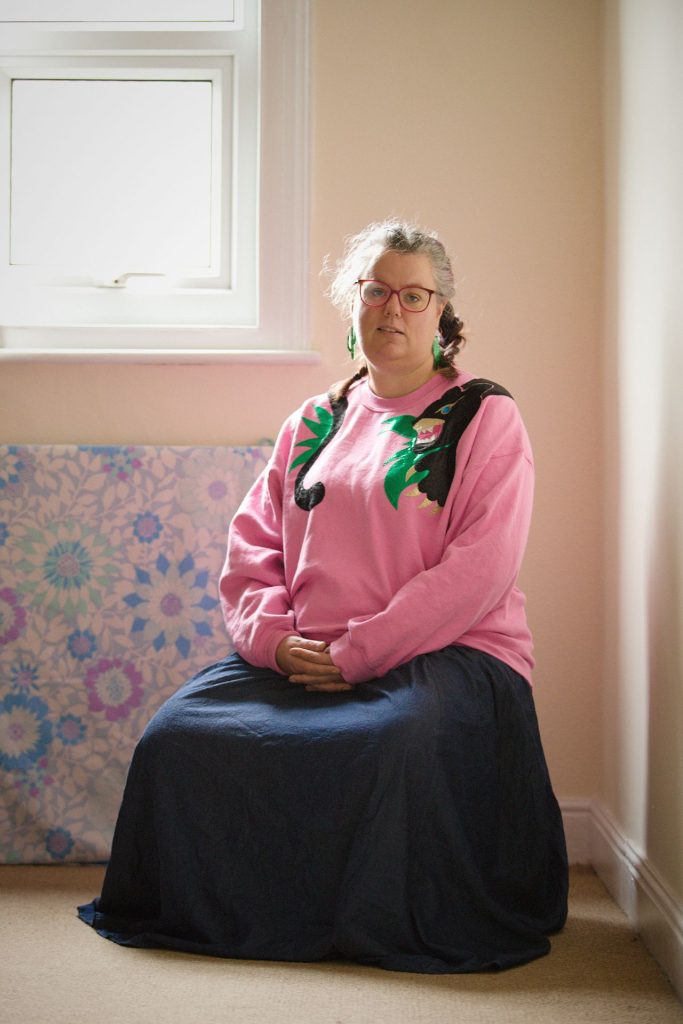
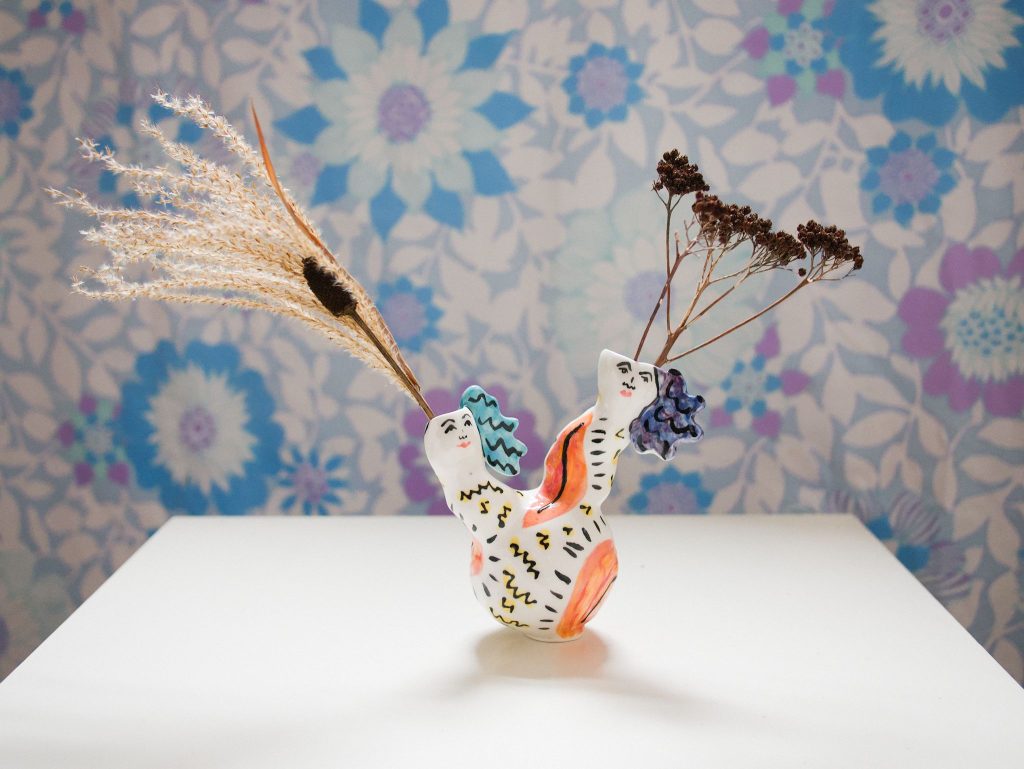
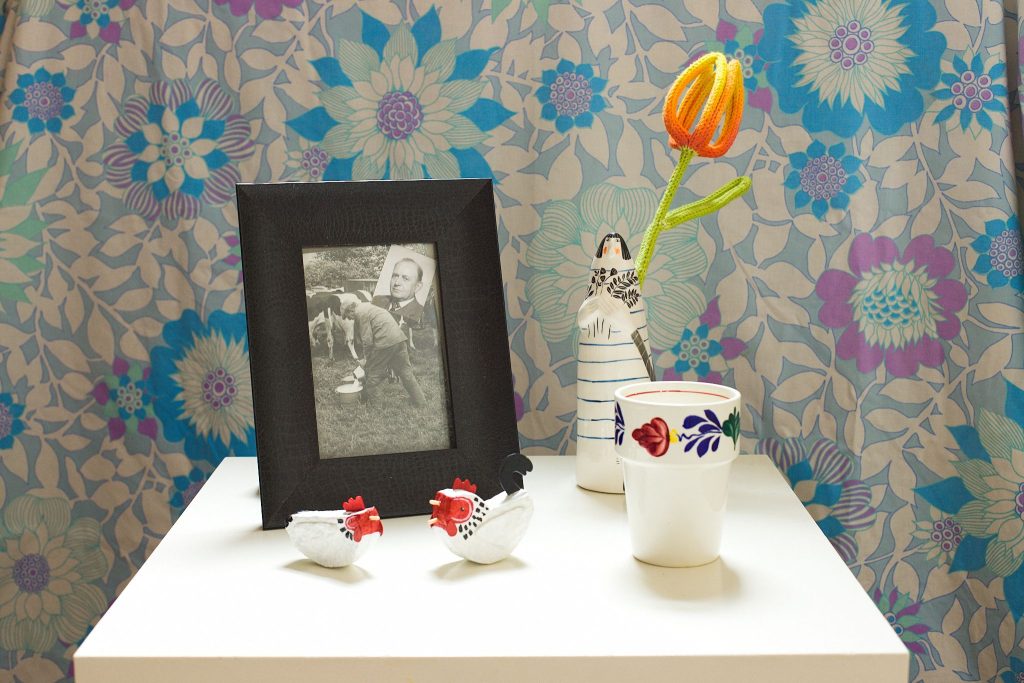
Initially my idea was to have a group of collaborative portraits together for a series linked by a common theme. However, this was whittled down after talking through feedback with my cohort peer group where it was pointed out I was in danger of spreading myself thin. I ended up, partly through accident / circumstance, concentrating on one subject only (my wife) which helped a great deal as she really got into the collaborative part and drove the ideas herself. We going to be continuing the project in some form in the near future but whether I use it for my MA is unknown at the moment.
The theme my wife chose is Heimat – that which describes her relationship with her home country of the Netherlands.
From the comprehensive German BROCKHAUS encyclopaedia:
KRUG, Nora. 2018. Heimat: a German Family Album. UK:
“ That term which defines the concept of an imaginarily developed, or actual landscape or locations, with which a person… associates an immediate sense of familiarity. This experience is… imparted across generations, through family and other institutions, or through political ideologies. In common usage, HEIMAT also refers to the place (also understood as a landscape) that a person is born into, where they experience early, socialization that largely shapes identity, character, mentality and worldviews …”
Particular Books.
Critical report
As I covered in the last post, I started constructing my critical theory essay about collaborative portraiture by working to this simple structure of working broad then narrowing down:
- What is collaborative portraiture?
- Who does it who I like?
- How have I done it before and how have I developed it?
Obviously it’s a bit more complicated than that but I found it easiest to stick to this.
For the photographers I examined in the second part I went through researching quite a few but ended up settling on Dawoud Bey and Alec Soth as I liked the layers and nuance of their work, and also how their approaches have changed over the years (especially Bey).
To do (next time)
Definitely writing up things in a CRJ format helped me get started with working on my Critical Theory report, so I will continue this next time for the next module. About a quarter of the way through the module I set myself a target of writing 200 words per day – I didn’t always hit it but usually made it up the following day or two. This was extremely helpful when tackling the Critical Report as I could rework some of the text or refer to it as I had already researched part of an area to look at which I could choose to include or not. It also helped me when typing up references (see bottom list) as it eats up a surprising amount of time at the end of a project when you’ve got much better things to do like editing and tweaking. It also frees up mountains of tabs in your browser windows.
Library days: I’ve now got SCONUL access to York St John’s Uni library, so I’ve spent a few mornings and afternoons there on a Friday or Monday looking through different areas of research. I want to expand this to other places – the Baltic Art Centre in Newcastle has a really good library and I’m looking into Leeds and Manchester.
The big question for me is if I follow the methods I’ve worked on in this project and keep looking at the Heimat theme or look into another theme area for the next module?
Reading
NB: the bulk of these are references for what I added into the Critical Report.
Photovoice, ethics and collaboration
ARTSPACE. 2019. ‘Collaboration: a potential history of photography.’ Artspace [online]. Available at: https://artspacenewhaven.org/exhibitions/collaboration-a-potential-history-of-photography/ [accessed 02 November 2022].
BUDIG, Kirsten et al. 2018. ‘Photovoice and Empowerment: Evaluating the Transformative Potential of a Participatory Action Research Project’. BMC public health 18(1), 432–432.
GUBRIUM, Aline C, Amy L HILL and Sarah FLICKER. 2014. ‘A Situated Practice of Ethics for Participatory Visual and Digital Methods in Public Health Research and Practice: A Focus on Digital Storytelling’. American journal of public health (1971) 104(9), 1606–14.
LAURENT, Oliver. 2015. ‘Long Read: How collaboration is at the heart of the best contemporary photojournalism.’ Huck [online]. Available at: https://www.huckmag.com/art-and-culture/photography-2/collectives-changing-rules-photojournalism/ [accessed 02 November 2022].
LEAR, Rowan. 2014. ‘The Social Turn: Collaboration and Its Discontents’. Rowan Lear | Research [online]. Available at: https://thathasbeen.wordpress.com/2014/06/15/the-social-turn-collaboration-and-its-discontents/ [accessed 16 October 2022].
MILNE, E-J and Rachel Muir. 2020. ‘Photovoice: A Critical Introduction’. Edited by L. (Luc) Pauwels and Dawn Mannay (ed.). The Sage Handbook of Visual Research Methods. Second edition. London: Sage, 282-296.
PALMER, Daniel. 2017. Photography and Collaboration from Conceptual Art to Crowdsourcing. London: Bloomsbury Academic.
PHOTOGRAPHY AS A SOCIAL PRACTICE. 2020. ‘Photography as Dialogue’. Photography As A Social Practice [online]. Available at: https://www.asocialpractice.com/photography-as-dialogue/ [accessed 03 November 2022].
RUYGT, Anne. 2019. ‘Welkom Today: On Collaborative Practice in Contemporary Photography’. Stedelijk Studies Journal 8 [online]. Available at: https://stedelijkstudies.com/journal/welkom-today-on-collaborative-practice-in-contemporary-photography/ [accessed 02 November 2022]
WANG, Caroline and Mary Ann BURRIS. 1997. ‘Photovoice: Concept, Methodology, and Use for Participatory Needs Assessment’. Health education & behavior 24(3), 369–87.
Socially engaged photography and art
COLOURING IN CULTURE. 2014. ‘Socially engaged art – an ‘arts’ perspective.’ Colouring In Culture [online]. Available at: https://colouringinculture.wordpress.com/2014/05/16/socially-engaged-art-an-arts-perspective/ [accessed 03 November 2022].
LOWE, Toby. 2012. ‘A QUALITY FRAMEWORK FOR HELIX ARTS’ PARTICIPATORY PRACTICE – Toby Lowe July 2012.’ Readkong [online archive]. Available at https://www.readkong.com/page/framework-for-helix-arts-participatory-4217868 [accessed 03 November 2022].
TILLER, Chrissie. ca.2019. ‘Sharing Power: from participation to collaboration.’ British Council [online]. Available at https://www.britishcouncil.org/arts/culture-development/our-stories/sharingpower [accessed 12 November 2022]
Critical theory
AZOULAY, Ariella, Rela MAZALI and Ruvik DANIELI. 2008. The Civil Contract of Photography. Translated by Rela Mazali and Ruvik Danieli. New York: Zone Books.
AZOULAY, Ariella. 2010. ‘Getting Rid of the Distinction Between the Aesthetic and the Political’. Theory, culture & society 27(7-8), 239–62.
BARRETT, Terry. 2012. Criticizing Photographs: an Introduction to Understanding Images. 5th ed. New York: McGraw-Hill Higher Education.
BEECH, Dave. 2010. ‘Include me Out!’. Visual Into Social [online]. Available at: https://visualintosocial.wordpress.com/category/talks/dave-beech-on-participation/ [accessed 16 November 2022]
BENJAMIN, Walter. 2008. The Work of Art in the Age of Mechanical Reproduction. London: Penguin.
FAIREY, Tiffany. 2018. ‘Whose Photo? Whose Voice? Who Listens? “Giving,” Silencing and Listening to Voice in Participatory Visual Projects’. Visual studies (Abingdon, England) 33(2), 111–26.
FAIREY, Tiffany and Liz ORTON. 2019. ‘Photography as Dialogue’. Photography & culture 12(3), 299–305.FILETTI, Noemi. 2020. ‘Is participatory photography the promise for social change?’. ARTDOC Photography Magazine [online]. Available at: https://www.artdoc.photo/articles/is-participatory-photography-the-promise-for-social-change [accessed 2 November 2022].
FUERTES, Joanna. 2020. ‘The Bourdainification of Food Travel’. Vittles [online]. Available at: https://vittles.substack.com/p/the-bourdainification-of-food-travel [accessed 14 October 2022].
GODDEN, Robert. 2017. ‘Participatory Photography — Jack of all trades, master of none?’. Robert Godden | Medium [online]. Available at: https://medium.com/@robertgodden/participatory-photography-jack-of-all-trades-master-of-none-a42a263142d6 [accessed 16 November 2022].
GREENOUGH, Keith. 2013. ‘Disarming the Pose’. photo-graph [online]. Available at: https://photo-graph.org/2013/02/16/disarming-the-pose/ [accessed 14 October 2022].
KING, Ynestra. 1993. ‘The Other Body: Reflections on difference, disability, and identity politics.’ Ms, 3(5), 72-75.
SONTAG, Susan. 1979. On Photography. Harmondsworth: Penguin.
TURNBULL, Gemma-Rose. 2016. ‘Photography and Collaboration’. Photography as a social practice. Available at: https://www.asocialpractice.com/photography-and-collaboration/
YATES, Mick. 2018. ‘Some notes on Ariella Azoulay’s writing.’ Mick Yates Photography [online]. Available at: https://www.yatesweb.com/some-notes-on-ariella-azoulays-writing/ [accessed 14 October 2022].
Photographers
APERTURE FOUNDATION. 2008. Dawoud Bey and Carrie Mae Weems’ Talk at Aperture [recorded talk]. Available at: https://vimeo.com/3287587 [accessed 12 November 2022]
BEY, Dawoud. 2019. Dawoud Bey on Photographing People and Communities. New York, N.Y: Aperture.
BINLOT, Ann. 2019. ‘Photographer Alec Soth spent a year being a stranger in people’s homes.’ Document Journal [online]. Available at: https://www.documentjournal.com/2019/03/photographer-alec-soth-spent-a-year-being-a-stranger-in-peoples-homes/ [accessed 18 October 2022].
DENT, Lisa. 2012. ‘Community Pictures: Q+A with Dawoud Bey.’ Art In America [online]. Available at: https://www.artnews.com/art-in-america/interviews/dawoud-bey-56277/ [accessed 14 November 2022].
EWALD, Wendy. 2016. ‘Towards a Promised Land’. Wendy Ewald [online]. Available at: https://wendyewald.com/portfolio/margate-towards-a-promised-land/ [accessed 14 November 2022].
FLETCHER, Gem [Presenter]. 2020. ‘Alec Soth – On Portraiture.’ The Messy Truth [online]. Available at: https://play.acast.com/s/themessytruth/alecsoth-onportraiture [accessed 25 October 2022]
HUNTER, Tom. 1997. ‘Persons Unknown, 1997′. Tom Hunter [online]. Available at: http://www.tomhunter.org/persons-unknown/ [accessed 16 November 2022]
INDRISEK, Scott. 2019. ‘Alec Soth On The “Ethically Dubious” Side of Photography.’ GARAGE [online]. Available at https://garage.vice.com/en_us/article/8xyp8p/alec-soth [accessed 18 October 2022].
OXLEY, Matthew. 2018. ‘Pål Hansen: searching for a true collaborative portrait’. World Photography Organisation. Available at: https://www.worldphoto.org/blogs/11-04-18/searching-true-collaborative-portrait [accessed 14 October 2022].
PANTALL, Colin. 2013. ‘Alec Soth, 44’. British journal of photography 160(7813), 44–7.
RPS. 2022. ‘Topic: RPS Engagement Talk – Barry Lewis’. RPS Documentary Group [live webinar]. Available at: https://www.eventbrite.co.uk/e/rps-engagement-talk-barry-lewis-tickets-406319842587 (permanent online version to be confirmed by organiser) [accessed 6 October 2022].
RUYGT, Anne. ca.2019. ‘On Collaborative Practice in Contemporary Photography’. Stedelik Studies [online]. Available at: https://stedelijkstudies.com/journal/welkom-today-on-collaborative-practice-in-contemporary-photography/ [accessed 4 November 2022].
SANCHO, Victoria A-T. 1998. ‘Respect and Representation: Dawoud Bey’s Portraits of Individual Identity’. Third text 12(44), 55–68.
WOLF, Sasha. 2022. PhotoWork with Sasha Wolf. Alex Soth. Available at: https://photowork.pinecast.co/episode/570edebf/alec-soth-episode-43 [accessed 25 October 2022].
Portraits and Portraiture
BRILLIANT, Richard. 1991. Portraiture. London: Reaktion.
DEAN, Stephanie. 2011. ‘”Smile!”: A Polemic on Fine Art Portraiture.’ F-Stop [online]. Available at: https://www.fstopmagazine.com/pastissues/49/Dean.html [accessed 27 October 2022].
GILLANDERS, Robin. 2004. The Photographic Portrait: Techniques, Strategies and Thoughts on Creating Portraits with Meaning. Newton Abbot: David & Charles.
STRECKER, Alexander. ca. 2017. ‘Fleeting Truths: Thoughts on Portrait Photography.’ lensculture [online]. Available at: https://www.lensculture.com/articles/national-portrait-gallery-fleeting-truths-thoughts-on-portrait-photography [accessed 12 November 2022].
Misc
STANISLAVSKY, Konstantin. 1948. An Actor Prepares. New York: Theatre Arts Books.